Blueprint for Change: Reflections from Dame Elizabeth Anionwu
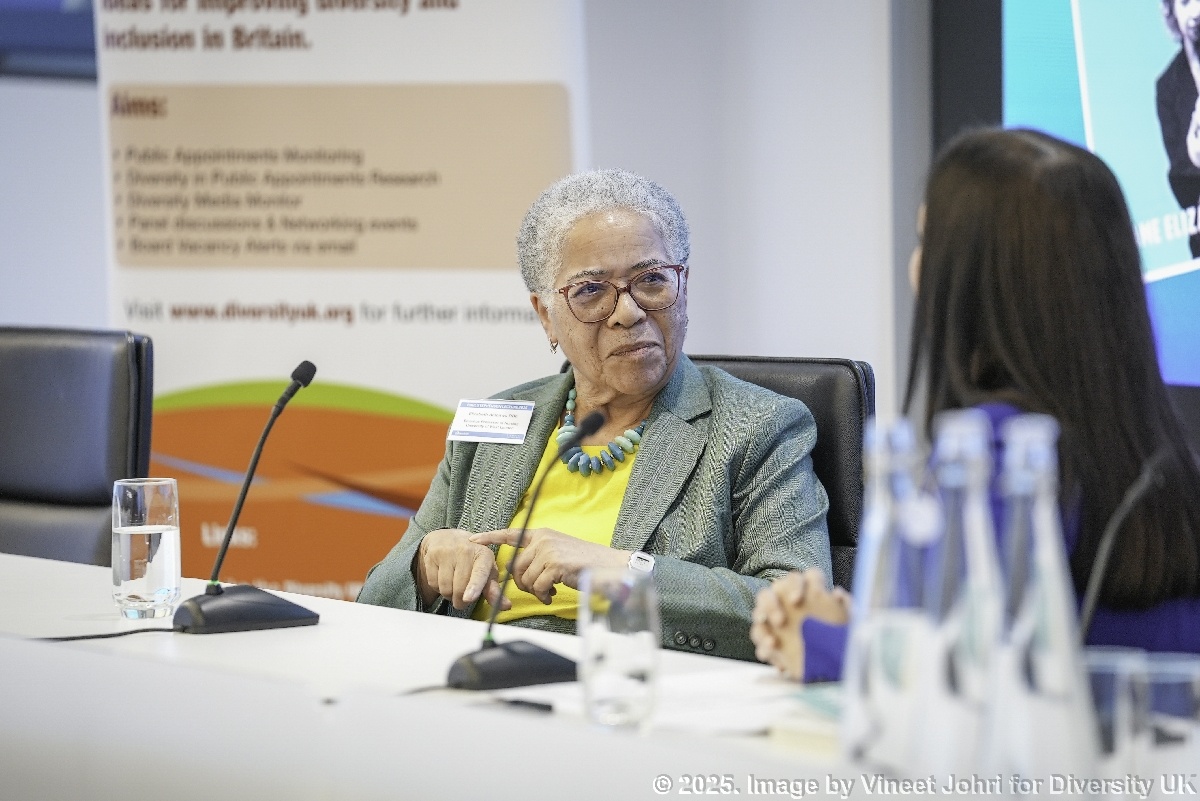
The 2025 Paul Stephenson Lecture brought together an audience of professionals, academics and community leaders for an intimate and deeply moving fireside chat with Professor Dame Elizabeth Anionwu OM DBE FRCN FQICN. Hosted at Eversheds Sutherland in London on Wednesday 12 November 2025, the event formed part of Diversity UK’s annual programme honouring the legacy of civil rights pioneer Dr Paul Stephenson OBE and served as the culminating healthcare themed discussion of the year.
This year’s theme, Blueprint for Change: Dreams from My Mother, centred on Dame Elizabeth’s acclaimed memoir, a story that intertwines race, identity, resilience and a lifelong commitment to compassionate care. Her conversation with Lopa Patel MBE, Chair of Diversity UK, illuminated not only the struggles she faced but also the transformative actions that shaped modern approaches to sickle cell and thalassaemia care in Britain.
Childhood, Identity and the Weight of Early Expectations
Drawing on the powerful early chapters of her memoir, Dame Elizabeth reflected on the circumstances of her birth to an Irish Catholic mother and a Nigerian father who met as students at Cambridge. Her mother’s refusal to give her up for adoption yet practical need to place her in care created a childhood in which belonging was often fractured and complex. She spoke about navigating mixed heritage at a time of limited understanding and frequent stigma, describing both the shame imposed by others and the gradual reclaiming of her own sense of identity.
Despite stark experiences of racism at school and in public spaces, she recalled moments of joy and mischievous childhood pleasure. These early contradictions, she observed, taught her that hardship and happiness often coexist and that resilience can be nurtured through finding light in small things. She also recognised that small acts of kindness shifted her path.
Reunion, Reconciliation and the Strength of Her Mother
A pivotal moment in her childhood came at the age of nine when she re-joined her mother’s household. The reunion stirred a complex mix of relief, confusion and gratitude. In the fireside chat she reflected on how that experience reshaped her understanding of family and helped her see the profound sacrifices her mother had made, from relinquishing her academic aspirations to raising five children with limited means. Dame Elizabeth spoke about the abuse she endured from her stepfather that led to her mother giving her up for a second time to be raised by her maternal grandparents.
Discovering Nigerian Heritage and Owning Her Identity
Her later search for her father was one of the most revealing sections of the conversation. She described the surprise of discovering him within three days of searching, living in North London and the profound impact of connecting with her Nigerian relatives. This journey expanded her sense of self and helped her embrace a renewed sense of belonging that carried both British and Igbo heritage.
Her decision to change her surname by deed poll to Elizabeth Nneka Anionwu symbolised a visible and confident reclamation of identity, even when she knew some might mispronounce it or joke about it. This step marked a personal turning point, an affirmation of the dreams and heritage she had inherited from both sides of her family.
A Calling into Nursing and a Mission for Change
The seed of her nursing career came from a simple act of care delivered by a nun during her childhood. This moment of tenderness became a lifelong inspiration. Beginning her NHS journey at sixteen, Dame Elizabeth rose to become the first Sickle Cell Nurse Specialist in the UK and founded the country’s first sickle cell and thalassaemia counselling service in 1979. Her work transformed how the NHS supported families with these conditions and helped drive improved understanding and visibility of health inequalities affecting Black communities.
When asked about the motivation behind creating the service, Dame Elizabeth explained that anger and frustration at systemic neglect eventually became catalysts for action. She translated personal experience into advocacy and later into pioneering clinical practice.
Mentorship, Representation and the Power of Visibility
Throughout her career she witnessed shifts in public health understanding and race equality. Some changes brought hope. Others illuminated persistent gaps. The disproportionate impact of the COVID- 19 pandemic on Black and Asian communities demonstrated that entrenched inequalities remain a pressing challenge, echoing themes she has highlighted for decades.
Dame Elizabeth also noted that her own progression within the NHS was often supported by mentors who did not share her background. This taught her that allyship can come from unexpected places and that leadership requires creating opportunities for others to be seen. Being called a role model felt both humbling and purposeful as she recognised the need to clear a path for future generations.
Motherhood, Forgiveness and Legacy
The fireside chat moved into personal territory as Dame Elizabeth discussed caring for her mother later in life, describing it as a profound lesson in forgiveness and compassion. She also reflected on raising her daughter Azuka as a single parent and on the joy of seeing her granddaughter Rhianne capture her spirit in a humorous and affectionate poem.
Asked what she would say to her younger self, she spoke of the importance of confidence, self acceptance and trusting in one’s instincts, particularly when navigating spaces where representation is scarce.
A Blueprint for Change
The discussion concluded with a forward looking message inspired by the final chapters of her memoir.Lopa Patel shared with the audience the outline she had gleaned from the memoir about a practical route to activism which encouraged forming supportive groups, studying the subject deeply, documenting experiences, gathering data and evidence and seeking help when needed. Dame Elizabeth said that proudest achievements and hardest setbacks both served as reminders that change requires patience, courage and collective effort.
For young people from mixed heritage or non traditional families and for those entering healthcare or activism, her advice was clear. Carry your dreams with you. They can become a compass for both personal growth and social transformation.
A Night of Inspiration and Shared Purpose
As the event drew to a close, Diversity UK presented Dame Elizabeth Anionwu with its Lifetime Achievement Award which was presented by the Trustees alongside Claire Carroll, Partner, Eversheds Sutherland who said, “”At Eversheds Sutherland, we've enjoyed a long and rewarding partnership with Diversity UK, and so it was our absolute pleasure to host the annual Paul Stephenson lecture once again. It was also a real privilege to hear Dame Elizabeth Anionwu's inspirational words."
Sareeta Vala, Trustee of Diversity UK, closed the event with a powerful reflection. She said:
"An inspiring, moving and heartfelt thank you to Dame Elizabeth. It is an extraordinary presence and legacy you have shared with us tonight. A theme that I picked up from your message is how you use anger to drive and channel this into transformation. Using emotion to drive motion. Three messages we can take away from tonight: connection, responsibility to turn challenge into leadership and into movement. The Paul Stephenson Lecture is more than reflection. It is about direction. You have shown us tonight that courage and a touch of righteous rebellion are powerful tools for progress."
Guests then enjoyed networking and a book signing that extended the uplifting spirit of the evening.
The 2025 Paul Stephenson Lecture served not only as a celebration of Dame Elizabeth Anionwu’s extraordinary contributions but also as a reminder that compassionate activism can reshape systems, shift narratives and give voice to communities too often overlooked. Above all, it reminded all present that dreams handed down through generations can spark change far beyond what any one person imagines.